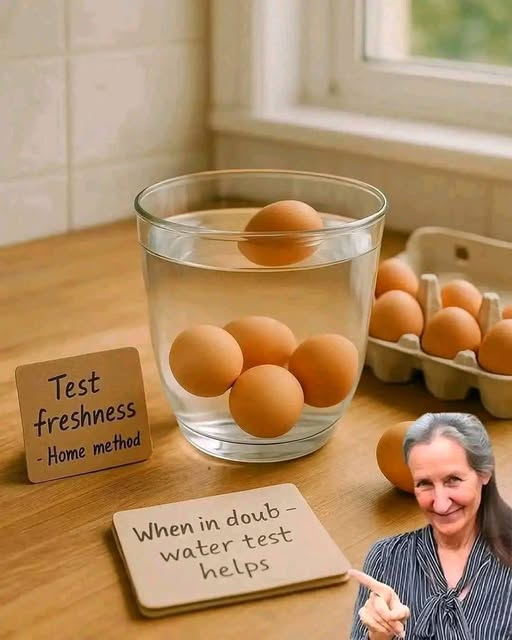
Fill a glass or bowl with cold water.
Gently place the egg in the water.
Observe how the egg behaves.
Results:
Fresh Egg: Sinks and lies flat at the bottom ✅
Old Egg: Sinks but stands upright ⚠️
Rotten Egg: Floats to the top ❌ (discard immediately)
Why This Works
As eggs age, tiny air pockets form inside the shell. The more air inside the egg, the less dense it becomes, causing it to float. Fresh eggs have minimal air inside, so they sink and remain flat. Older eggs gradually develop larger air pockets, making them stand upright. Eggs that float have significant air inside, which is a sign of spoilage.
Additional Tips for Using Eggs Safely
Test before cracking: If unsure about an egg’s freshness, always perform the water test before using it in cooking.
Smell test: Fresh eggs should have no odor. If an egg smells sulfurous or off after cracking, discard it immediately.
Cooking tip:
