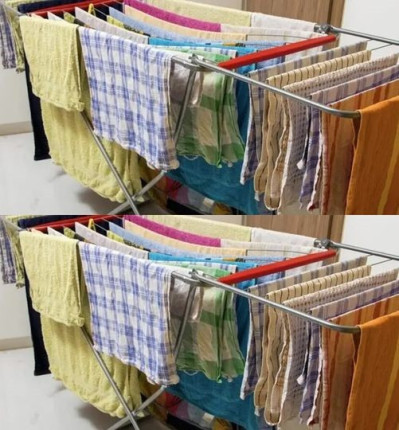
High moisture can warp wood, peel paint, and damage plaster. Even brick and concrete walls can suffer from prolonged dampness.
4. Unpleasant Odors
Clothes that dry slowly indoors may develop a musty smell due to stagnant moisture, which can be hard to remove without rewashing.
5. Energy & Efficiency Considerations
While indoor drying saves electricity compared to dryers, it doesn’t remove moisture as efficiently. This can lead to longer drying times and increased heating costs in winter if you try to speed up drying.
6. Safety Concerns
Hanging laundry near heaters or stoves can pose a fire risk. Wet fabrics can also drip onto electrical outlets or cords, creating hazards.
Tips for Safer Indoor Drying
Use a well-ventilated room or open windows to reduce humidity.
Consider a dehumidifier to control moisture levels.
Avoid drying laundry in bedrooms or small, enclosed spaces.
Space out clothes on racks to allow air circulation.
Use a fan to speed up drying and reduce dampness.
