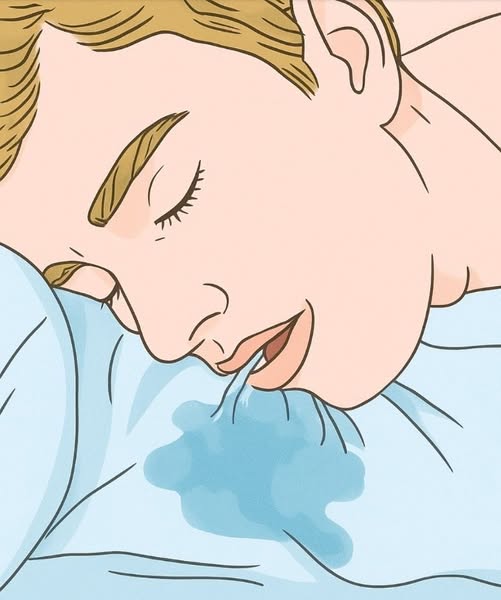
During deep sleep, facial muscles relax, including those around the mouth, which can lead to drooling.
Excess Saliva Production
Some people naturally produce more saliva. Certain foods, medications, or oral conditions can increase saliva flow at night.
Dental Issues
Mouth infections, misaligned teeth, or poorly fitted dentures can sometimes cause drooling.
Medical Conditions (less common)
Conditions affecting the nervous system, like sleep apnea, acid reflux, or Parkinson’s disease, can sometimes contribute to nighttime drooling.
What You Can Do
Change sleeping position: Try sleeping on your back with your head slightly elevated.
Address nasal congestion: Use saline sprays or a humidifier to keep nasal passages clear.
Check oral health: Regular dental check-ups help prevent issues that could cause drooling.
Hydrate and watch diet: Avoid overly acidic or salty foods before bed, which can stimulate saliva.
💡 Tip: If drooling is sudden, excessive, or accompanied by other symptoms (like difficulty swallowing or speech changes), it’s worth consulting a doctor to rule out underlying causes.
