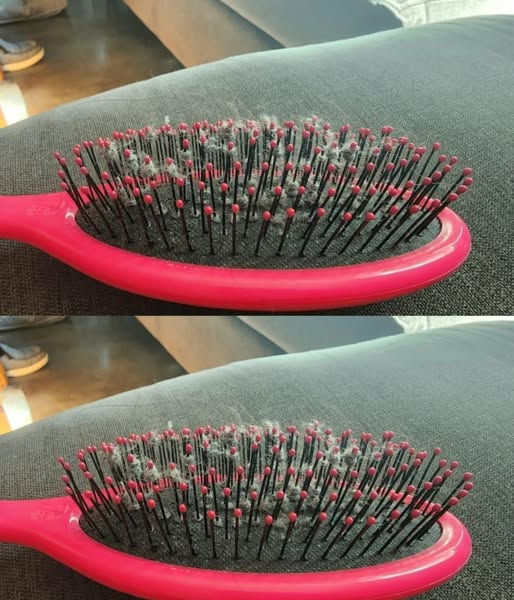
Scalp Irritation: Bacteria and fungi can cause itchiness, redness, or dandruff.
Unhealthy Hair: Product buildup and trapped oils can make hair look greasy or dull.
Spread of Germs: Brushes used by multiple people can transfer bacteria or fungi between users.
Hair Breakage: Stiff, gunky bristles make detangling rougher, causing more hair breakage.
How to Clean Your Hairbrush Properly
Step 1: Remove Hair
Use your fingers or a comb to pull out as much hair as possible from the bristles.
Step 2: Soak and Wash
Fill a bowl with warm water and a few drops of shampoo or a teaspoon of baking soda.
Submerge the brush (avoid soaking wooden handles for too long) and let it sit for 10–15 minutes.
Step 3: Scrub the Bristles
Use an old toothbrush to scrub the base and bristles, removing stubborn residue.
Step 4: Rinse and Dry
Rinse thoroughly with clean water.
Shake off excess water and place the brush bristle-side down on a towel to air dry completely.
Maintenance Tips
Clean brushes at least once a week if used daily.
Avoid sharing brushes with others to reduce bacterial transfer.
For wooden brushes, wipe with a damp cloth instead of soaking.
Remove hair after every use to prevent buildup.
Bottom Line
That gray fuzz on your brush is more than just hair—it’s a mixture of debris and microbes that can harm your scalp and hair. Regular cleaning not only keeps your brushes hygienic but also supports healthier, shinier hair.
