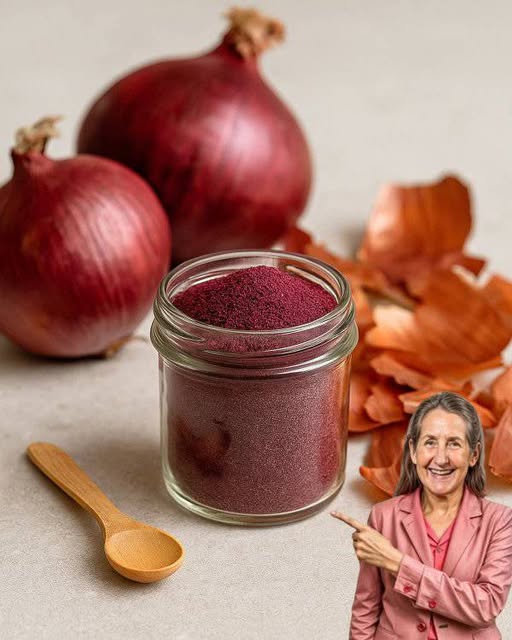
Rediscover the humble onion peel—an ingredient often overlooked but full of flavor and character. Grandma knew its value, and now you can, too!
Introduction
When I was little, I’d watch my mother peel onions for soups and stews, carefully saving the skins. “Don’t waste these,” she’d say. Over time, I learned that those delicate, papery peels could transform dishes, adding color, fragrance, and subtle depth—without costing a thing.
Gentle Benefits People Believe In
Though not eaten directly, onion peels are celebrated in folk traditions for:
Enhancing soups and broths with rich color and depth.
Bringing subtle, earthy flavor to roasted vegetables and meats.
Supporting wellness when used in teas or infusions (traditional belief).
Reducing kitchen waste while elevating cooking.
These are culinary and folk practices, not medical claims.
How to Make Fragrant Onion Peel Powder
Ingredients:
Outer dry peels of onions (yellow, red, or white)
Instructions:
Collect dry onion peels and rinse lightly if dusty. Pat them dry.
Spread the peels on a tray and either:
Dry in the sun for several days, or
Use an oven at low heat until crisp.
Once fully dry, grind into a fine powder with a spice grinder or mortar and pestle.
Store in a small glass jar with a tight lid; lasts for months if kept dry.
Use sparingly to season roasted potatoes, stews, or grilled meats.
Extra Tips from the Kitchen
Add whole peels directly to soup stock for golden color, then strain before serving.
Mix peel powder with salt and garlic for a homemade seasoning blend.
Red onion peels can give a beautiful hue to rice or natural dishes.
Conclusion
Onion peels are more than kitchen scraps—they’re a time-honored way to boost flavor, color, and tradition in your cooking. Grandma was right: even the peel has a gift to give.
