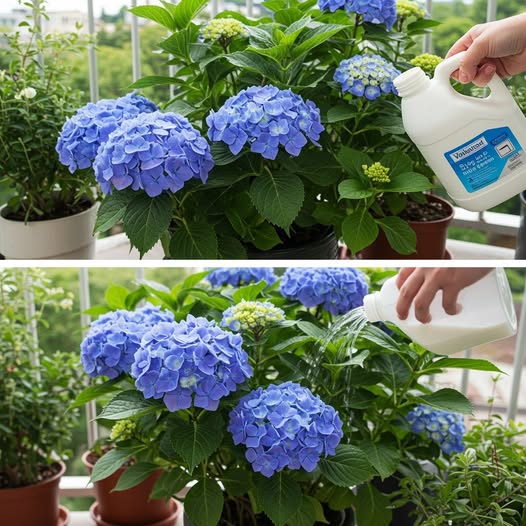
Bigleaf (Hydrangea macrophylla): Prune lightly after flowering; remove dead or weak stems, but avoid cutting too much as they bloom on old wood.
Panicle (Hydrangea paniculata) and Smooth (Hydrangea arborescens): Prune in late winter or early spring; these bloom on new wood.
General Rule: Always remove dead, damaged, or crossing branches to encourage airflow and reduce disease risk.
5. Protecting From Pests and Diseases
Common pests: aphids, spider mites, and scale. Use insecticidal soap or neem oil if infestations appear.
Diseases: powdery mildew or leaf spot can occur in humid conditions. Improve air circulation and avoid overhead watering.
6. Seasonal Care
Spring: Fertilize and check for winter damage; prune as needed.
Summer: Maintain consistent watering, deadhead spent flowers for continuous blooming.
Fall: Stop fertilizing to prepare plants for dormancy; remove fallen leaves to prevent disease.
Winter: Protect sensitive varieties with mulch or burlap in colder climates.
7. Encouraging Larger Blooms
