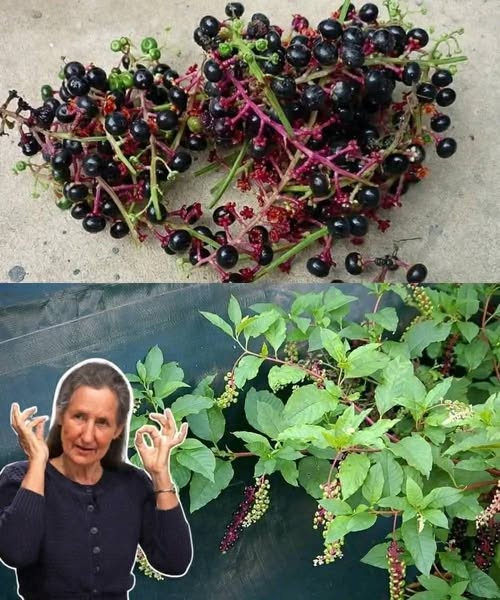
Pokeweed is a common plant in North America that can be highly toxic. Knowing how to identify it and understanding the risks is essential for safety.
How to Identify Pokeweed
Pokeweed can grow 8–10 feet tall and has distinct features:
Stems: Thick, smooth, and bright reddish-purple as they mature.
Leaves: Large, simple, alternate, 4–12 inches long.
Flowers: Small, white to greenish-white, forming clusters that develop into berries.
Berries: Dark purple to almost black, growing in elongated clusters, similar in appearance to grapes.
Habitat: Often found in open fields, along fences, roadsides, pastures, and gardens where birds may drop seeds.
Why Pokeweed Is Dangerous
All parts of pokeweed—roots, stems, leaves, and berries—contain toxic compounds such as phytolaccatoxin and phytolaccigenin. These can affect the gastrointestinal system, nervous system, and heart.
Toxicity Facts:
