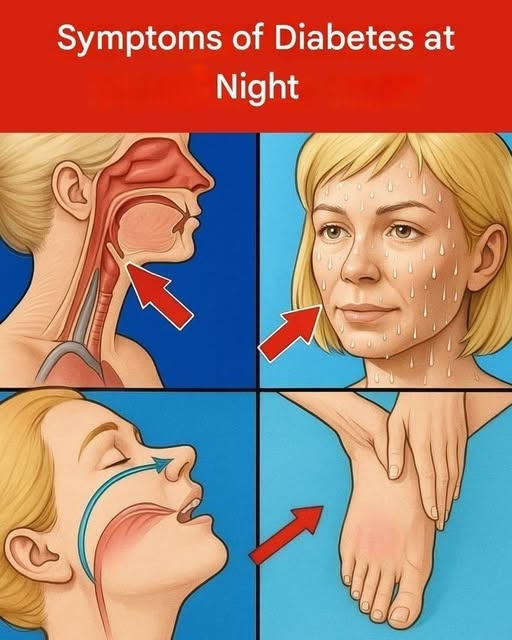
High blood sugar can make you feel unusually thirsty, even waking you up in the middle of the night to drink water. This is your body’s way of trying to dilute excess glucose in the bloodstream.
What to Do:
Keep water by your bedside.
Track your overall fluid intake and urination patterns.
Get your blood sugar checked regularly.
5. Nighttime Hunger or Sudden Cravings
Low blood sugar during the night may trigger sudden hunger, restlessness, or even nightmares. This can occur if your insulin levels peak or if you’ve skipped dinner or eaten an unbalanced meal.
What to Do:
Have a balanced evening snack with protein and complex carbs.
Monitor nighttime glucose trends.
Adjust meals with guidance from your healthcare provider.
Conclusion
Nighttime symptoms can provide important clues about your blood sugar management. Frequent urination, night sweats, restless legs, increased thirst, and nighttime cravings shouldn’t be ignored—they are your body’s signals asking for attention.
If you experience any of these signs regularly, it’s essential to consult a healthcare professional. Early detection and proper management of diabetes can prevent serious complications and help you enjoy a healthier, more restful night’s sleep.
