Introduction
Nutrient deficiencies can sneak up on anyone, even with a balanced diet. Your body often gives subtle signs when it lacks essential vitamins or minerals. Recognizing these early can prevent long-term health issues and improve overall well-being. Here’s a guide to 20 key symptoms that may indicate nutrient deficiencies.
Symptoms and Their Possible Nutrient Deficiencies
Fatigue and Weakness – Often linked to iron, vitamin B12, or magnesium deficiencies.
Pale Skin – Can signal iron, vitamin B12, or folate shortages.
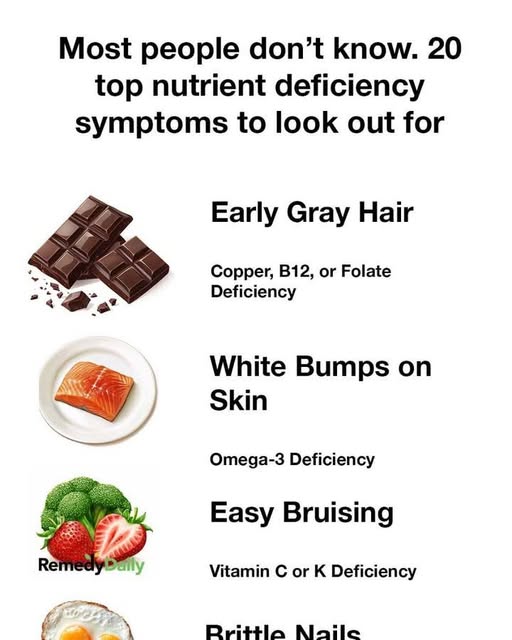
Brittle Nails – May indicate biotin, iron, or zinc deficiency.
Hair Loss – Could be caused by iron, zinc, protein, or vitamin D deficiency.
Muscle Cramps or Spasms – Often due to low magnesium, calcium, or potassium.
Frequent Illness – Weak immunity may suggest low vitamin C, vitamin D, or zinc.
Slow Wound Healing – Often linked to vitamin C, zinc, or protein deficiencies.
Numbness or Tingling in Hands and Feet – Could indicate vitamin B12 or magnesium deficiency.
Poor Night Vision – Might be a sign of vitamin A deficiency.
Swollen or Bleeding Gums – Often due to vitamin C deficiency (scurvy).
Bone Pain or Weak Bones – Can indicate calcium, vitamin D, or vitamin K deficiency.
Irritability or Mood Swings – Low B vitamins, magnesium, or omega-3 fatty acids can be a factor.
Cracks at the Corners of the Mouth – May suggest iron, zinc, or B2 (riboflavin) deficiency.
Glossy or Swollen Tongue – Can indicate B vitamin deficiency.
Digestive Problems – Low fiber, magnesium, or vitamin B12 may contribute.
Hair Turning Gray Prematurely – Could relate to copper, B12, or folate deficiency.
Excessive Thirst or Frequent Urination – May point to magnesium or vitamin D imbalance.
Paleness Around Eyes – Often linked to iron or vitamin B12 deficiency.
Memory or Concentration Problems – Could be due to B12, vitamin D, or omega-3 deficiencies.
Easy Bruising – May indicate vitamin C, vitamin K, or protein deficiency.
Tips to Prevent Nutrient Deficiencies
Eat a varied diet rich in fruits, vegetables, whole grains, lean proteins, and healthy fats.
Consider fortified foods or supplements if recommended by a healthcare professional.
Stay hydrated and maintain a balanced lifestyle with adequate sleep and physical activity.
Regular check-ups and blood tests can help catch deficiencies early.
Final Note
Your body often gives early warning signs when something is missing in your diet. Paying attention to these 20 symptoms can help you act quickly, improve your health, and prevent long-term issues.
