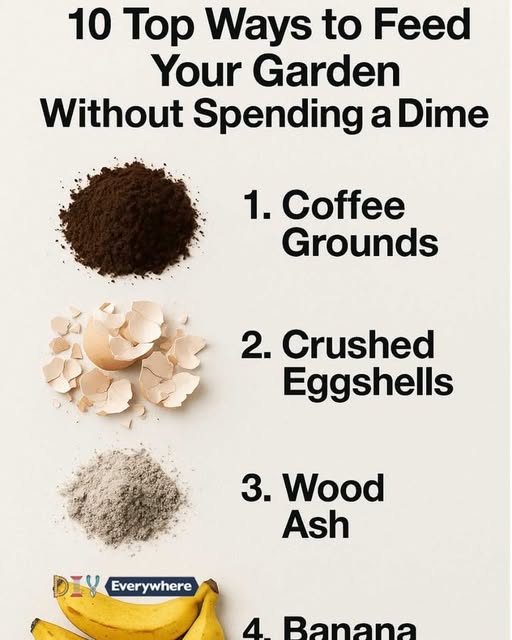
Sprinkle used coffee grounds or tea leaves around acid-loving plants like tomatoes, blueberries, and roses. They improve soil structure and attract earthworms.
5. Wood Ash
If you burn untreated wood, scatter cooled ashes into your garden. They add potassium and calcium but should be used sparingly, especially in alkaline soils.
6. Banana Peels
Chop banana peels and bury them near the roots of plants for a potassium and phosphorus boost, especially great for flowering plants and roses.
7. Weeds (Before They Seed)
Soak pulled weeds in a bucket of water for a few days to make a “weed tea” fertilizer. Strain and pour around your plants for extra nutrients.
8. Eggshells
Crush eggshells and scatter them in the soil. They slowly release calcium and can also help deter slugs and snails.
9. Rainwater
Set up a bucket or barrel to collect rainwater. It’s free, chemical-free, and often healthier for plants than tap water.
10. Homemade Compost
Combine all your kitchen scraps, yard waste, and organic matter in a compost bin or pile. Over time, it breaks down into rich, fertile soil food for your garden.
Final Thought
Feeding your garden doesn’t need to cost a thing. By recycling what you already have at home and in nature, you’re not only saving money but also creating a more sustainable gardening routine. The result? Healthier soil, stronger plants, and a greener environment—all for free.
